 |
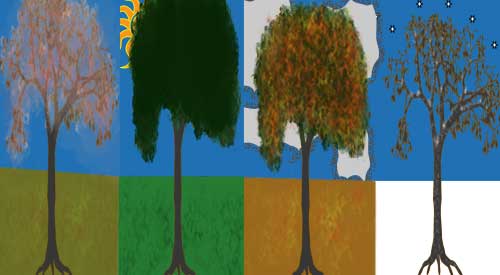
| The four season has an affect on wood storage and its cooking or smoking potential |
Wood Storage-I recently had a lovely telephone
conversation with a new customer who had previously lived in the
Carolinas and now was dealing with the great variability of climate in
the state of Colorado. This customer had the fortitude to think about
the altitude, humidity and temperature differences in Colorado and how
they might affect hardwood purchased from us and stored in his new home
state.
This got me thinking about the information we currently offer
regarding hardwoods. We’ve provided you with information on differences
of hardwoods and which are ideal for cooking, on why moisture is important for certain methods of cooking, and how to store hardwood. I think what’s missing is maintaining the stability of hardwoods in different climates. To do this, you need to know Equilibrium Moisture Content (EMC) for each state and for each season.
Let me first state some facts about hardwood and wood storage.
The Ideals for Wood Storage
Wood at or above the fiber saturation
point – which I define as the point in the drying process when only bound water
in the cell walls remain with all free water removed from cell cavities -will
lose moisture when exposed to any relative humidity below 100 percent. The
average fiber saturation point is 26%.
Totally dry (oven dried) wood will absorb moisture when exposed to
any relative humidity except when at zero. At a constantly maintained
temperature and relative humidity, any wood will reach a point where it
neither loses nor gains any moisture. When wood is in moisture balance
with the relative humidity of the air surrounding it at a given
temperature, the wood has reached its equilibrium moisture content
(EMC). Put another way, in an environment maintained at a constant
relative humidity and temperature, the wood will come to a moisture
content that is in equilibrium with the moisture of the air. I believe
the ideals for relative humidity are 37 to 53% and temperature 66° to
74° F. Keep in mind, relative humidity is much more important to EMC
than temperature.
Why is
knowing EMC important when it comes to hardwood or in this case, cooking
hardwood?
Knowing this
information can provide an indication of how fast the cooking wood might dry
out or the likelihood that a wood might regain some moisture during specific
seasons and in specific states in the USA.
EMC Averages in the USA for Wood Storage
There are five designations I am giving to the outdoor conditions for
wood storage: arid (having little or no rain), dry (low relative
humidity with little moisture), moist (air with high relative humidity),
damp (air with moisture), and wet (air with high water vapor). As
you’ll see, some states have no variation in condition based on season
and others see significant variation. I’ll be listing the average EMC
for season and the condition designation per season. Keep in mind, each
hardwood responds to these conditions slightly differently based on the
density of the wood and the conditions it grows in.
Winter: average EMC = 13.9; Designation = Wet
Spring: average EMC = 12.9; Designation = Wet
Summer: average EMC = 14.6; Designation = Wet
Fall: average EMC = 15.6; Designation = Wet
Winter: average EMC = 13.6; Designation = Damp
Spring: average EMC = 13; Designation = Damp
Summer: average EMC = 13.8; Designation = Damp
Fall: average EMC = 13.6; Designation = Damp
Winter: average EMC = 13.6; Designation = Damp
Spring: average EMC = 13; Designation = Damp
Summer: average EMC = 13.3; Designation = Damp
Fall: average EMC = 13.4; Designation = Damp
Winter: average EMC = 9.8; Designation = Dry
Spring: average EMC = 7.2; Designation = Arid
Summer: average EMC = 7.9; Designation = Arid
Fall: average EMC = 8.4; Designation = Arid
Winter: average EMC = 12.7; Designation = Wet
Spring: average EMC = 11; Designation = Moist
Summer: average EMC = 10; Designation = Dry
Fall: average EMC = 11.4; Designation = Dry
Winter: average EMC = 11; Designation = Wet
Spring: average EMC =8.9; Designation = Moist
Summer: average EMC = 8.6; Designation = Dry
Fall: average EMC = 9.4; Designation = Dry
Winter: average EMC = 12.6; Designation = Wet
Spring: average EMC = 11.6; Designation = Moist
Summer: average EMC = 12.4; Designation = Dry
Fall: average EMC = 13; Designation = Dry
Winter: average EMC = 12.3; Designation = Wet
Spring: average EMC = 11.8; Designation = Moist
Summer: average EMC = 12.2; Designation = Dry
Fall: average EMC = 13.1; Designation = Dry
- District of Columbia (DC):
Winter: average EMC = 11.9; Designation = Wet
Spring: average EMC = 11.8; Designation = Moist
Summer: average EMC = 12.2; Designation = Dry
Fall: average EMC = 12.8; Designation = Dry
Winter: average EMC = 13.9; Designation = Wet
Spring: average EMC = 13; Designation = Moist
Summer: average EMC = 14.4; Designation = Dry
Fall: average EMC = 14.3; Designation = Dry
Winter: average EMC = 13; Designation = Wet
Spring: average EMC = 12.3; Designation = Moist
Summer: average EMC =13.2; Designation = Dry
Fall: average EMC = 13.5; Designation = Dry
Winter: average EMC = 13.5; Designation = Wet
Spring: average EMC = 13; Designation = Moist
Summer: average EMC = 12.5; Designation = Dry
Fall: average EMC = 13; Designation = Dry
Winter: average EMC = 14.5; Designation = Wet
Spring: average EMC = 10.3; Designation = Moist
Summer: average EMC = 7.9; Designation = Dry
Fall: average EMC = 10.7; Designation = Dry
Winter: average EMC = 14.7; Designation = Wet
Spring: average EMC = 12.9; Designation = Moist
Summer: average EMC = 13.2; Designation = Dry
Fall: average EMC = 13.5; Designation = Dry
Winter: average EMC = 15.1; Designation = Wet
Spring: average EMC = 12.8; Designation = Moist
Summer: average EMC = 12.9; Designation = Dry
Fall: average EMC = 13.7; Designation = Dry
Winter: average EMC = 14.8; Designation = Wet
Spring: average EMC = 13.1; Designation = Moist
Summer: average EMC = 13.6; Designation = Dry
Fall: average EMC = 13.7; Designation = Dry
Winter: average EMC =13.2; Designation = Wet
Spring: average EMC = 12.3; Designation = Moist
Summer: average EMC = 12; Designation = Dry
Fall: average EMC = 12.2; Designation = Dry
Winter: average EMC = 13.9; Designation = Wet
Spring: average EMC = 12.3; Designation = Moist
Summer: average EMC = 13.3; Designation = Dry
Fall: average EMC = 13.1; Designation = Dry
Winter: average EMC = 14.5; Designation = Wet
Spring: average EMC = 13.9; Designation = Moist
Summer: average EMC = 14.4; Designation = Dry
Fall: average EMC = 13.9; Designation = Dry
Winter: average EMC = 13.5; Designation = Wet
Spring: average EMC = 12.2; Designation = Moist
Summer: average EMC = 13.1; Designation = Dry
Fall: average EMC = 14.3; Designation = Dry
Winter: average EMC = 12.2; Designation = Wet
Spring: average EMC = 11.5; Designation = Moist
Summer: average EMC = 12.1; Designation = Dry
Fall: average EMC = 12.8; Designation = Dry
Winter: average EMC = 12.4; Designation = Wet
Spring: average EMC = 11.6; Designation = Moist
Summer: average EMC = 12.2; Designation = Dry
Fall: average EMC = 12.9; Designation = Dry
Winter: average EMC = 17.3; Designation = Wet
Spring: average EMC = 12.8; Designation = Moist
Summer: average EMC = 13.2; Designation = Dry
Fall: average EMC = 14.7; Designation = Dry
Winter: average EMC = 14.7; Designation = Wet
Spring: average EMC = 12.8; Designation = Moist
Summer: average EMC = 13.6; Designation = Dry
Fall: average EMC = 14.4; Designation = Dry
Winter: average EMC = 14.2; Designation = Wet
Spring: average EMC = 13.4; Designation = Moist
Summer: average EMC = 13.9; Designation = Dry
Fall: average EMC = 13.7; Designation = Dry
Winter: average EMC = 14; Designation = Wet
Spring: average EMC = 13; Designation = Moist
Summer: average EMC = 13.3; Designation = Dry
Fall: average EMC = 13.3; Designation = Dry
Winter: average EMC = 13.8; Designation = Wet
Spring: average EMC = 10.9; Designation = Moist
Summer: average EMC = 9.4; Designation = Dry
Fall: average EMC = 11.4; Designation = Dry
Winter: average EMC = 13.5; Designation = Wet
Spring: average EMC = 12.3; Designation = Moist
Summer: average EMC = 12.3; Designation = Dry
Fall: average EMC = 12.3; Designation = Dry
Winter: average EMC = 11.4; Designation = Wet
Spring: average EMC = 8.5; Designation = Moist
Summer: average EMC = 6.5; Designation = Dry
Fall: average EMC = 8.4; Designation = Dry
Winter: average EMC = 13; Designation = Wet
Spring: average EMC = 11.6; Designation = Moist
Summer: average EMC = 12.4; Designation = Dry
Fall: average EMC = 13.5; Designation = Dry
Winter: average EMC = 12.5; Designation = Wet
Spring: average EMC = 11.5; Designation = Moist
Summer: average EMC = 12; Designation = Dry
Fall: average EMC = 12.8; Designation = Dry
Winter: average EMC = 9.7; Designation = Wet
Spring: average EMC = 6.8; Designation = Moist
Summer: average EMC = 8.5; Designation = Dry
Fall: average EMC = 9.2; Designation = Dry
Winter: average EMC = 13.9; Designation = Wet
Spring: average EMC = 11.6; Designation = Moist
Summer: average EMC = 12.6; Designation = Dry
Fall: average EMC = 13.7; Designation = Dry
Winter: average EMC = 13; Designation = Wet
Spring: average EMC = 12.4; Designation = Moist
Summer: average EMC = 13.7; Designation = Dry
Fall: average EMC = 13.6; Designation = Dry
Winter: average EMC = 15.1; Designation = Wet
Spring: average EMC = 13.2; Designation = Moist
Summer: average EMC = 12.7; Designation = Dry
Fall: average EMC = 13.6; Designation = Dry
Winter: average EMC = 14.9; Designation = Wet
Spring: average EMC = 12.7; Designation = Moist
Summer: average EMC = 12.8; Designation = Dry
Fall: average EMC = 13.7; Designation = Dry
Winter: average EMC = 13; Designation = Wet
Spring: average EMC = 12.5; Designation = Moist
Summer: average EMC = 12.4; Designation = Dry
Fall: average EMC = 12.6; Designation = Dry
Winter: average EMC = 16.4; Designation = Wet
Spring: average EMC = 13; Designation = Moist
Summer: average EMC = 10.7; Designation = Dry
Fall: average EMC = 13.4; Designation = Dry
Winter: average EMC = 13.4; Designation = Wet
Spring: average EMC = 11.4; Designation = Moist
Summer: average EMC = 12.6; Designation = Dry
Fall: average EMC = 13.4; Designation = Dry
Winter: average EMC =12.2; Designation = Wet
Spring: average EMC = 11.5; Designation = Moist
Summer: average EMC = 12.3; Designation = Dry
Fall: average EMC = 12.8; Designation = Dry
Winter: average EMC = 12.8; Designation = Wet
Spring: average EMC = 13.3; Designation = Moist
Summer: average EMC = 13.2; Designation = Dry
Fall: average EMC = 13.2; Designation = Dry
Winter: average EMC = 14.2; Designation = Wet
Spring: average EMC = 12.9; Designation = Moist
Summer: average EMC = 12.5; Designation = Dry
Fall: average EMC = 12.8; Designation = Dry
Winter: average EMC = 13.7; Designation = Wet
Spring: average EMC = 12.6; Designation = Moist
Summer: average EMC = 13.4; Designation = Dry
Fall: average EMC = 13.4; Designation = Dry
Winter: average EMC = 12.9; Designation = Wet
Spring: average EMC = 12; Designation = Moist
Summer: average EMC = 12.1; Designation = Dry
Fall: average EMC = 12.5; Designation = Dry
Winter: average EMC = 14.2; Designation = Wet
Spring: average EMC = 9.7; Designation = Moist
Summer: average EMC = 7.2; Designation = Dry
Fall: average EMC = 10.2; Designation = Dry
Winter: average EMC = 13.4; Designation = Wet
Spring: average EMC = 11.9; Designation = Moist
Summer: average EMC = 12.2; Designation = Dry
Fall: average EMC = 13.7; Designation = Dry
Winter: average EMC = 10; Designation = Wet
Spring: average EMC = 11.9; Designation = Moist
Summer: average EMC = 13; Designation = Dry
Fall: average EMC = 13.1; Designation = Dry
Winter: average EMC = 16.9; Designation = Wet
Spring: average EMC = 12.7; Designation = Moist
Summer: average EMC = 11.2; Designation = Dry
Fall: average EMC = 14.2; Designation = Dry
Winter: average EMC = 13.8; Designation = Wet
Spring: average EMC = 12.4; Designation = Moist
5; Designation = Damp
Fall: average EMC = 14.2; Designation = Damp
Winter: average EMC = 11.7; Designation = Wet
Spring: average EMC = 10.5; Designation = Moist
Summer: average EMC = 8.9; Designation = Dry
Fall: average EMC = 10.2; Designation = Dry
So, what do you take from these
numbers? Locations in what we call the
dry climates of the US Southwest exhibit the lowest EMCs, with Nevada posting
the lowest annual EMC. Locations considered
coastal or near coastal like Alaska, the Gulf coast, and Northwest have the
highest EMCs, with an island in Alaska having the highest annual EMC of over
19%. Of course, for the lower states, Washington
state has the highest EMC of over 17%.
The largest variability in EMC occurs
in the states of eastern Washington, eastern Oregon, and Idaho. Those states with the smallest variability
include the deep South with Texas leading the list. For 48% of the country, the range of monthly
EMC variability is between 2 and 4%.
When it comes to times of the year
with the highest EMC, its no surprise that December leads for most of the
Midwest, western and northern states.
The south tends to show the most variability in September, with April
and May demonstrating the most stability for 58% of the country.
Without question, certain locations will find it more challenging to
purchase hardwood for cooking and maintain its stability. Hopefully,
this guide will assist you selecting the best season to purchase or to
maintain a sizable inventory of product.
What challenges have you found with wood storage for cooking and
barbecue? Let us know in the comments and don’t forget to follow us on
all platforms. Providing tips, techniques, recipes, and the science
behind the flame and fire to improve your skills with wood-fired
cooking! That’s SmokinLicious®!