Showing posts with label wood. Show all posts

Thursday, June 3, 2021

WOOD CHIPS BY AIR PROCESS

Smokinlicious® collects wood chips by Air

Over the past several months, you have learned how your own hands can play host to transmitting the virus known as COVID-19. Once transmitted, the virus can potentially live on surfaces for up to several days.

Of course, there are factors that determine how attracted the virus is to the surface. Porous surfaces like those of cardboard and wood are not very attractive to the virus. It prefers smooth surfaces.

But there is still so much we do not know. SmokinLicious® continues to prioritize limiting human contact with our product manufacture and packaging. Our position is, we do not know enough to stop being diligent in our efforts.

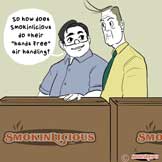
Time to revisit our cartoon friends! Tom and Bert recently discussed the SmokinLicious® air collection process for wood chips.

Why Air Collected Packaging is Better!

Chef Bert and Tom visiting our production facility

Tom asks a great question, as often, we do not think about the wood we cook with. How is it bulk stored, what has it been exposed to, how much dust is in the product? Remember, dust slows combustion and can cause equipment failures. This is the main reason why SmokinLicious® designed a process for screening our wood chips to eliminate as much dust as possible. That is just step #2 in the process after producing the chips from larger pieces of wood.

Dedicated Air Piping

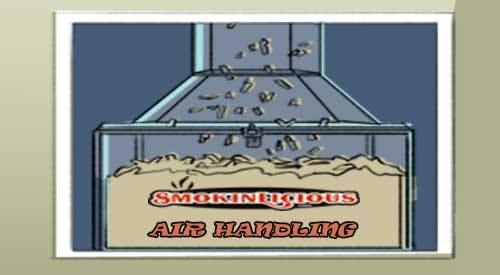
depiction of our vaccum system and air piping system for packaging

Step #3 in the process is explained by Bert as piping that is used to fill customer orders. At SmokinLicious®, each chip size is segregated into storage totes by size and wood species. When a customer order is filled, clean air piping is introduced to the specific storage tote. The product is then collected and dispensed into the finished packaging using this air collection method. A couple key benefits to this hands-free approach is dust-free collection and no crushing of the chips by human hands, ensuring the product you pay for is not reduced to crumbs!

No Contact

Tom celebrating

Bert is quick to emphasis that no human contact is made with the product during packaging. He also stresses that the air packaging greatly improves the air quality for the worker since this is a contained system. No dust is launched into the air!

No dust for the customer who will scoop out product at home and no dust for the workers packaging the products. With respiratory status key to staying healthy, SmokinLicious® makes the effort to keep our workers breathing clean air.

Do you appreciate the extra steps SmokinLicious® is taking with packaging? Leave us a comment and subscribe to get our latest tips, techniques, recipes and the science behind the fire and smoke, for all live fire cooking methods. That’s SmokinLicious®!


Thursday, December 17, 2020

WOOD SAFETY AND OUR EFFORTS TO PROTECT YOU!

image of wood safety and our 75-75 rule
Our 75 degree c for 75 minutes is for wood safety product to protect your health and the environment.

You’re likely giving thought to many more potential hosts for the COVID-19 in an effort to keep everyone important to you safe and healthy.  Without question, everything you touch has the potential to be a host for the virus that is spreading so rapidly around the world.  It is without question, a scary time.  What you likely don’t realize is SmokinLicious® has always been committed to protecting our customers from the transfer of potential contaminants.

Not Just Any Wood Supplier

In our previously published article titled, DEMYSTIFYING TERMS USED FOR SELLING SMOKING & GRILLING WOOD we attempted to explain what the varying words used to describe preparation to wood sold for grilling and smoking actually meant.  The important point to take from this article is that these various “labels” don’t relate to what can assure bacterium and viral agents don’t survive if they grab onto the wood to ride as a viral or bacteria host.  In the end, we are the only current supplier who not only sells hardwood only for the purpose of cooking, but utilizes a heat treatment process that is at a level to ensure no microbial or viral agent can latch on to the wood and infect the user.

Even though we use an intense heat level of 75°C/167°F, we developed a method to ensure the hardwood is not dried out to to where it would be classified as firewood, something we never want to be compared with.

Remember, we know some fungi spores are only killed at 60 °C/140 °F, mold spores at 56 °C/133 °F, and listeria at 74 °C/165.2 °F. Although there is no confirmed data on the heat level that COVID-19 dies, we do know that sunlight results in the viral agent only surviving a few hours, given the intensity of the ultraviolet rays.  This suggests that heat does play an important role in reducing the virus surviving.

The current regulations in place for wood just don’t make assurances to safety.  Our efforts reinforce that potentially fatal bacterium cannot enter our food chain.  You can handle our packaging and cook with our products knowing we’ve done our part to ensure no transfer of bacterium or infectious agent.

Can your local firewood or other wood supplier make the same claim?  SmokinLicious® – the brand that’s pure, clean, and safe for cooking.

Do you plan to grill and/or smoke more at home with the recent COVID-19 scare?  Leave us a comment and subscribe to get our latest tips, techniques, recipes and the science behind the fire and smoke, for all live fire cooking methods.  That’s SmokinLicious®!


Tuesday, April 21, 2020

THE USA IS NOT ALONE: ITALY’S OLIVE TREES FALL TO BACTERIUM

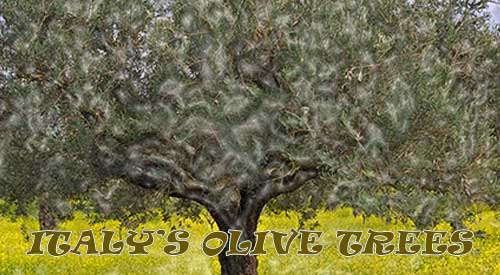
Olive Trees of Italy are facing the same Bacterium invasion as the USA
Italy’s Olive Trees

I am a wood geek.  I love the living cells of trees and the hundreds of compounds that produce the various aromatics, tannins and flavors that make trees so valuable for medicinal, cosmetic, and flavoring uses.  Whenever I’m in the woods, I always feel like these giants are breathing with me.
Then my joyful thoughts turn sad.  Observing over the years how our lifestyle and explorative ways have changed our atmosphere which in turn changes the natural order of things.  One of those things is our trees.

But North America is not alone!  Battles over the loss of various hardwoods and softwoods continue as we fight to save the forest giants as well as orchard soldiers around the globe.


Prepare for Higher Olive Oil Pricing


It’s called Xylella fastidiosa and it’s a deadly bacterium that is gaining attention as it takes mark on the olive trees and groves of Italy since 2013.  In 2016, this bacterium was blamed for the death of some one million olive trees in Southern Italy most of which were cut down to stop the deadly bacterium from spreading.  But it hasn’t stopped.  Even with netting and routine pruning, olive trees continue to suffer and eventually die or are cut down. 

We know that the bacterium starts somewhere within the heart of the tree and then travels towards the roots and branches.  This is the reason pruning can sometimes be beneficial.  Research has also shown that there are specific varieties of olive trees that are more susceptible to Xylella resulting in growers moving toward varieties with less risk when they replace or add new growth areas.

There is a pest, the meadow spittlebug, that is the carrier of Xylella and the reason it is necessary to net the trees to prevent this pest from traveling and spreading this major bacterium concern to other areas and other countries.

Much like our North American Emerald Ash Borer pest that is responsible for tens of millions of ash tree death and destruction, the meadow spittlebug and the Xylella bacterium it can carry results in loss of olive production to those damaged branches.  Although the olive oil pressed from the olives research shows does not carry any disease or risk, the bacterium has significantly reduced the volume of olives available to produce oil.  Thus, pricing goes up as availability of olives depletes.


It’s Not Just an Olive Concern


You might think this is just an olive tree issue but you’d be deadly wrong.  Xylella is a strain of bacterium that is considered one of the most dangerous plant bacteria in the world.  It causes a tree to die of thirst from the inside out by blocking the xylem or transport tissue of the tree responsible for moving water and nutrients from the roots upwards to other parts of the tree. Xylella is then carried from tree to tree by the spittlebug who latch on to the tree’s xylem tubes sucking out liquid.  When they travel to the next tree to feed, the bacterium they’ve picked up is passed into that tree’s xylem when they go to feed again.  With no cure, the plant or tree stays infected for life, until it dies. 

There have been strains of Xylella fastidiosa in citrus as well as pear, peach and plum.  There is also a potential new strain in Southern California that could affect the grape production which could decimate the wine production something not needed after all the years of wildfires.

Continents currently affected by this bacterium include North America, Europe, and Asia but more are expected.


What’s Next?


In my opinion, the focused concern is on the specific market of product whether it be olive oil, wine, or fruits and not on the tree destruction that is occurring all around us.  I’m wondering how much longer we have to witness century old trees dying and family businesses evaporating from what appears to be nature taking back or returning to the soil what she feels is rightly hers.  I can’t help but think that these pests that are invading our largest plants on our planet are likely the result of our own actions or even inaction.

How concerned are you about the North American trees?  Leave us a comment and subscribe to get our latest tips, techniques, and recipes, plus, the science behind the fire and smoke. 

Thursday, August 9, 2018

SMOKING-GRILLING WOOD SELLING TERMS -DEMYSTIFIED


Package labeling.  It is the key to drawing attention to a product, to reduce interest in other similar products, and to make someone buy a specific product.  Let’s be honest.  Not everything printed on a label necessarily provides ALL the information.  Use certain words and an “implied” thought will occur.

When it comes to packaging wood for smoking and grilling purposes, there are a lot of terms floating out there that certainly can be deceiving.  Let’s see if I can provide clarity on what specific terms and wording mean when it comes to purchasing wood for cooking, smoking, and grilling. SMOKING-GRILLING WOOD SELLING TERMS


100% Natural

The intended meaning of 100% natural implies that it has not been touched by human hands.  As such, with wood, this would refer to the fact that a tree is a plant designed by nature and other than cutting the tree down, it is not modified in any way.

However, we do know that trees, like flowers, can be manipulated when it comes to their genetics.  Genetically modified trees are quite common in the growth of orchard woods, especially those seeking to develop dwarf varieties or specific blossom colors or hybrids.  Keep in mind, genetically modified trees will have a reduction in the lignin compound which is responsible for the flavor the wood gives when it burns and gives off smoke vapor.

Currently, it is not legal to genetically modify forest trees but there is a lot of allowances when it comes to plantation and orchard/nursery trees, which often have chemicals applied to make up for the weak lignin which makes the wood susceptible to decay and pest infestation.


Kiln-Dried

Wood that is dried in a closed chamber in which the temperature and relative humidity of the circulated air can be controlled is called “kiln drying”.  There are three types of Kiln Drying methods: low-temperature drying which is below 130° F, conventional electric dehumidification drying, and conventional steam-heated drying which have temperatures up to 180° F.

For the most part, when a smoking or grilling wood product lists “kiln-dried” on the packaging, it does not state the type of method being employed.  Also, many that use this term do so without providing any information on what compliance record keeping is in place to attest that they are doing what they say.

There is one company who states that they adhere to the protocol designed by the United States Department of Agriculture (USDA) but quote a core temperature and length in minutes of the heating process that is not the standard written by the USDA.  Their compliance agreement is provided by the state in which the business is located, which may have a different standard in place than the USDA.


Air-Dried

The process of drying green wood by exposure to prevailing natural atmospheric conditions outdoors or in an unheated shed is known as air drying.  There are three dominate Air Drying methods: open yard, shed, and forced-air shed.  The first is not held in high regard as the wood is exposed to all the elements making it the longest method of depleting moisture content from the wood.  The second has the addition of a roof covering to maintain a precipitation-free environment, while the third option is mostly used by traditional lumber companies as it produces quicker results meaning products can be sold quicker.

Here’s the issue when you see “Air-Dried” on package labeling of grilling and smoking woods: you don’t know what method is used and no one is saying how long the wood was air-dried for.  You don’t know how old the wood is, what method of air drying was employed, how long it took to “dry” it, and you likely won’t know what moisture content is left in the wood.  Remember, dry out a piece of wood too far, and it is simply firewood designed for heat output only.


Naturally Cured

This is another term that floats out on the packaging that implies it is different from air drying techniques.  It is not different.

Naturally curing wood means the wood is stacked in a manner that allows air to flow around the wood pieces usually in an outdoor setting.  It may be left exposed, covered with a tarp or have a roof structure overhead.  Naturally curing wood for fireplace use is recommend for 365 days but there is no benchmark for the timing used to dry the wood for the use of smoking or grilling.  Some suppliers will use moisture levels of 20-30% as their benchmark but 10% is a large variable in moisture when it comes to wood.

Here is the biggest challenge with a natural curing method: dry the wood too quickly and you will find cracks, splitting, honeycombing, and/or warping.  Dry too slowly and the wood will stain and suffer decay.  Remember, decay attracts pests as that is what they feed on. SMOKING-GRILLING WOOD SELLING TERMS


Selecting

I won’t lie to you – there are a lot of choices out there for wood.  How do you go about selecting from the limited information on the packaging?

Some decisions you’ll have to make on your own: do you want to cook with bark or do you find that bark indeed fluctuates the temperature of your equipment too much?  Do you want to use a kiln-dried product even if you don’t know what temperature and for how long that product was heated?  Would you want to use a product that hasn’t had any heat application applied to it meaning there may be pests, larvae, mold, and spores that haven’t been eliminated by a heat process?  Do you want to use a product from a supplier that provides no information on the moisture of the wood?  Do you want to go with a “natural”, “air dried” product that may have been exposed to anything that could access the wood: animal feces and urine, insects, chemical contaminants from the ground or another source?
In the end, I think the selection can be easy by simply looking at the wood for purity and cleanliness, looking at the packaging for evidence of air exchange meaning its likely not completely dried out and looking at the packaging information for claims that don’t seem to match the product that is packaged inside.

Most of all, you should be able to gain valuable information from any supplier’s website on the wood they are selling to you.   If not, be cautious that they may not know anything about the manufacturing process of the wood and/or what is needed in wood to qualify it as cooking ingredient.  We hope that our discussion of smoking & Grilling Wood Selling Terms adds clarity to your selection process.

Thursday, July 19, 2018

HOT TREND MAY NOT BE THE SAFEST BET


Recently, I came across a great article on the new hot trends in cold cuts and smoked meats.  The article stressed how the $200 million in sales was the result of companies offering such things as chorizo, pepperoni, salami, and smoked bacon with bolder flavors and cleaner ingredients.  So, why do I have a problem with this?

What About the Smoke

The article went on to explain that the No. 1 trend in smoked and processed meats is products that are “uncured” or “no-nitrates added”, stating that this is due to the new health-conscious consumer.  This got me thinking about smoked products in general.  No one seems to be asking about the smoking process used to get that bacon hickory smoked!

If people are so sensitive to the ingredients in their foods, why haven’t we become concerned about the smoke component used for the actual process?

Demanding Label Changes

There are so many companies investing in the repackaging of their products to include such labels as “no-sugar-added”, “dairy-free”, and “gluten-free”.  Consumers are label readers and keenly interested in how products are made, how animals are raised, how products are preserved, and the percentage of fat in the processing.

One factor in food preparation that doesn’t seem to have been included in labeling is the actual smoking process for food products like smoked bacon, fish, or beef jerky.
Why doesn’t anyone seem concerned enough to ask what are they smoking with?  Is it actual wood or the wood-flavored vapor that is used to make liquid smoke, hardly an ingredient that would be considered chemical-free?

Wood Should Be a Food Ingredient Hot Trend

Let’s examine why wood should be looked at as a food ingredient when used for hot or cold smoking or wood-fired cooking in general.

First, not all companies selling wood products under the guise of smoking, identify what components of the tree are manufactured in the product.  Nor do they give any indication if the wood used in the manufacture of products started for only the purpose of food application. To clarify this point, let’s review one common seller of wood products found on Amazon.com.

This popular choice in wood chips started as a hickory and mesquite manufacturer of log products by a single owner back in 1986.  Originally, they sold logs to locals around their area.  Eventually, they branched out to wood chips and wood chunks in retail packaging when BBQ became so popular.
The company was sold to a fire log company who uses recycled wood sawdust and agricultural fibers to produce fireplace log products.  With the change in ownership, the company began selling other woods; pecan, post oak, and mesquite that are native to their home state of Texas, and the rest of the offerings which are brought in from other suppliers and locations.  There is no bark removal, there is no separation of wood layers.  Much of the product lies in open areas on the ground exposed to the southwestern sun as well as to anything else that may make contact.  The product is left uncovered in outdoor areas awaiting packaging, even after it has been kiln dried which is the only reference made to any preparation of the wood.

Here is one concern with the current ownership – keep in mind, with a primary business of manufacturing charcoal and fire log products, this business was originally connected to a cedar and basswood pencil business.  For those who don’t know woods, cedar and basswood are both softwoods, something that can be toxic if used for cooking food.

No Wood Regulations

There are no regulations that specifically state that you must guarantee that the wood packaged is clean, pure, and 100% of what it says it is on the label.  Just about anyone can start to package wood, whether hardwood or softwood or a combination of both, as a “cooking”, “grilling”, “smoking” or “BBQ” wood.  There are no regulations that it must be kiln dried or heat treated.  It is a free-for-all!

There may be claims that we are label readers, but it appears when it comes to wood used for cooking, we don’t have a clue.  This may be the oldest method of cooking in existence, but it certainly doesn’t have to contain the same risks as what the earliest homo sapiens endured.

The next time you see packaging that bacon, jerky, deli meat is of a smoked variety, look at the label and ask the question, “How was this smoked?”  You will be amazed that little or no answers are provided.  I hope you enjoyed our topic “Hot Trend” and the argument for better food labeling!

Thursday, June 14, 2018

WHAT WOOD TO USE FOR SMOKING: A PRIMER


I see the question asked so many times and in so many ways.  What is the best wood to use for smoking? What is the best wood to use for smoking (fill in the blank with your favorite food)?
I’m going to shake things up a bit by stating there is no rule book saying a specific wood must be used with a specific food.  There are, however, some basic things you should know to reduce the risks of toxicity, damage to your equipment, and overall ruining your barbecue.  Use the wrong hardwood and you can bitter any food you expose to that wood’s smoke.

Absolutely No Softwoods

Right up front, let me tell you, only smoke with hardwood.  Softwoods or coniferous woods should never be used for cooking because they have elevated sap levels and more air in their cell structure.  This causes the wood to burn fast, hot, produce lots of sparks, and produce unpleasant flavors not ideal for flavoring foods.  Let’s be clear on what a softwood is: pine, redwood, cedar, fir, spruce, hemlock, larch, cypress.
I realize that cedar has been a popular softwood used for plank cooking or wrapping foods.  If you want to learn more about the risks associated specifically with cedar, see my earlier article  and learn why you should discontinue this practice.

Meet the North American Hardwoods for what wood to use for smoking

Now, meet the North American Hardwoods!  Known as deciduous trees that produce broad leaves, produce a fruit or a nut, and generally go dormant in the winter, hardwoods are the woods to use for cooking and makeup roughly 40 percent of all trees in the United States.  However, not all hardwoods are created equal when it comes to flavoring foods.  Let’s examine some of the specific hardwoods of North America.  I am referencing our key to the boldness of the wood’s flavor (= Mild = Medium = Strong)

 Alder:

Part of the Birch family of hardwoods, Alder is a relatively soft hardwood of medium density.  It is most commonly used to smoke fish but can be used with mild poultry cuts, pork, vegetables, fruits and spices for natural wood flavoring/smoking.  The flavor profile is mild on our scale of boldness.  Alder provides a neutral coloring to the outer skin of foods and is the preference for those who like to cold smoke.

Ash:

Ash hardwood is part of the Oleaceae family or olive family of hardwoods and can be used with any food for natural wood flavoring/smoking.  The flavor profile is on the light side making it ideal for most any food but in particular, it works great with wood-fired pizza as it can lose moisture quickly providing for a great bed of coals.  Ash provides a neutral coloring to the outer skin of foods.

Aspen:

Considered a lightweight hardwood, Aspen is known to have “wet pockets” which can lead to some difficulty with using this as a cooking wood due to its tendency for bacteria development.  Variations in moisture can result in temperature variation during cooking which is directly opposite the goal when fire cooking.

   Basswood:

This hardwood is known as the preferred wood for carving.  It grows commonly with red oak, white ash, and sugar maple trees.  This wood is soft and light which makes it a quick burner.  It does not have any notable odor or taste which makes it a poor choice as a cooking wood.
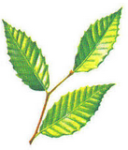
American Beech:

This hardwood grows in large stands and mixes in with many of the other dominate hardwoods.  It is a popular filler wood for making charcoal so you know it burns long and evenly.  It is classified as moderate in flavor boldness.

Birchwood:

This can be an ideal firewood choice due to the prevalence of the varieties of birch and the strength of the wood itself.  However, it is not a highly flavorful hardwood for cooking and burns too hot.  If used for fire cooking, you will have a challenge controlling the cooking temperature.
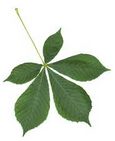
Buckeye:

This hardwood produces a poisonous nut as well as twigs.  For that reason alone, it is not recommended as a smoking/cooking wood.
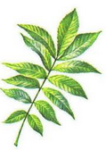
  

Butternut:

This hardwood belongs to the genus that includes walnut though it is not as weight-heavy a wood as walnut.  Don’t let the name confuse you.  There is no buttery taste to this wood.  In fact, it does not offer any balanced qualities when used for cooking and for that reason, is not recommended.

Cherry:

Like Oak, there are many species within the genus of cherry.  It has an obvious fruity aroma and tends to light easily producing a steady burn and flavor.  Wild or forest grown cherry is very different from orchard cherry which can have bitter undertones which may in part, be due to the chemical application commonly applied to nursery trees.  Feel free to use it with poultry, beef, pork, lamb, even vegetables, as it is a workhorse when it comes to flavoring foods.  Be sure to use a meat probe when cooking with cherry wood as this wood provides a reddish-pink hue to the meat that can easily be mistaken for under-cooking.
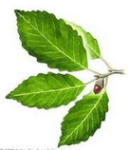
  Chestnut:

This is a very hearty hardwood that is resistive to decay so it is not necessarily an easy lighting wood.  It can be used for smoking though I certainly feel there are better choices out there.

  Cottonwood:

This hardwood is part of the genus that contains the aspens and poplars.  As such, like its siblings, it does not make for a good smoking wood.  In fact, when it becomes wet, it produces a sour odor which can transfer to food.

  Elm:

Although this is a dominant hardwood in the USA it is a hardwood that has no characteristic odor or taste.  For that reason, it does not make for an ideal cooking wood.

  Gum (Sweetgum):

A very heavy hardwood that holds moisture for indefinite periods of time which causes it to be a poor choice for pleasant smoke flavors.  This can produce musty aromas that can transmit to foods.

  Hackberry:

This is a moderately hard wood that has a yellow to grayish heartwood that does not make it the best choice for smoking.  The benefits of exposing food to this wood are not well documented and for that reason, is not an ideal choice.

  Hickory/Pecan:

Since these hardwoods are part of the same genus they share similar qualities: dense wood that is strong, can be difficult to lite, but produce a lot of color and flavor to foods.  What should be noted here is that not all the species are the same.  Some hickory varieties are very bold and can have bitter undertones.  It is important to learn the differences between varieties before selecting one for cooking.

   Maple:

There are over 120 species of maple so let’s clarify some of the terms.  Sugar maple and black maple are also called hard maple.  Silver maple, red maple, and boxelder are called soft maple.  These maples make for excellent smoking and cooking woods producing beautiful even coloring and a moderate flavor level.
   Persimmon:

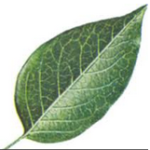
This is not a heavily populated hardwood in the USA and it is a slow grower.  It can be confused with Hickory due to similar coloring.  However, it does not produce the same flavors as hickory.

  Poplar:

An extremely light hardwood that does not hold any ideal moisture for smoldering to produce a clean smoke.  Poplar burns too quickly to be an ideal choice for cooking.

  Sycamore:

Although this hardwood has a medium weight and can burn evenly and for good length, it does not do anything for coloring foods or adding any pleasant flavor.  For this reason, it is not recommended for cooking.

  Red Oak:

The oaks are the one hardwood that worldwide dominates with the greatest number of species.  This is a heavy wood that can be difficult to light but once it ignites, it produces intense smoke and flavoring that is easy to distinguish when consuming foods cooked over it.  Red oak has a strong aroma and flavor, requiring a trained hand to use it.

  Walnut:

One of the heaviest hardwoods available, it belongs to the same genus as hickory and pecan.  If classified as smoking, it is on the bold side and should be used in small quantities.  The wood produces a very dark outer “bark” coloring.
  White Oak:

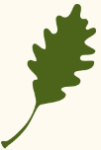
Similar in structure to Red Oak, the white variety tends to be less strong aromatically though it still produces an obvious bold flavor to foods.  Because it is a heavy, dense wood, it holds moisture for a long time making it more ideal for hot smoking and grilling rather than for cold smoke application.
There you have a quick guide on the hardwoods of North America and those considered ideals for fire cooking.  Experiment and keep a written log of what works with the other ingredients you use in your wood cooking.  Hope you enjoyed our discussion of what wood to use for smoking!